Viewer-Driven Emoji Prediction Systems Reshaping Mobile Esports Forecast Interactions
Henrik Ludwig · Sep 15, 2026
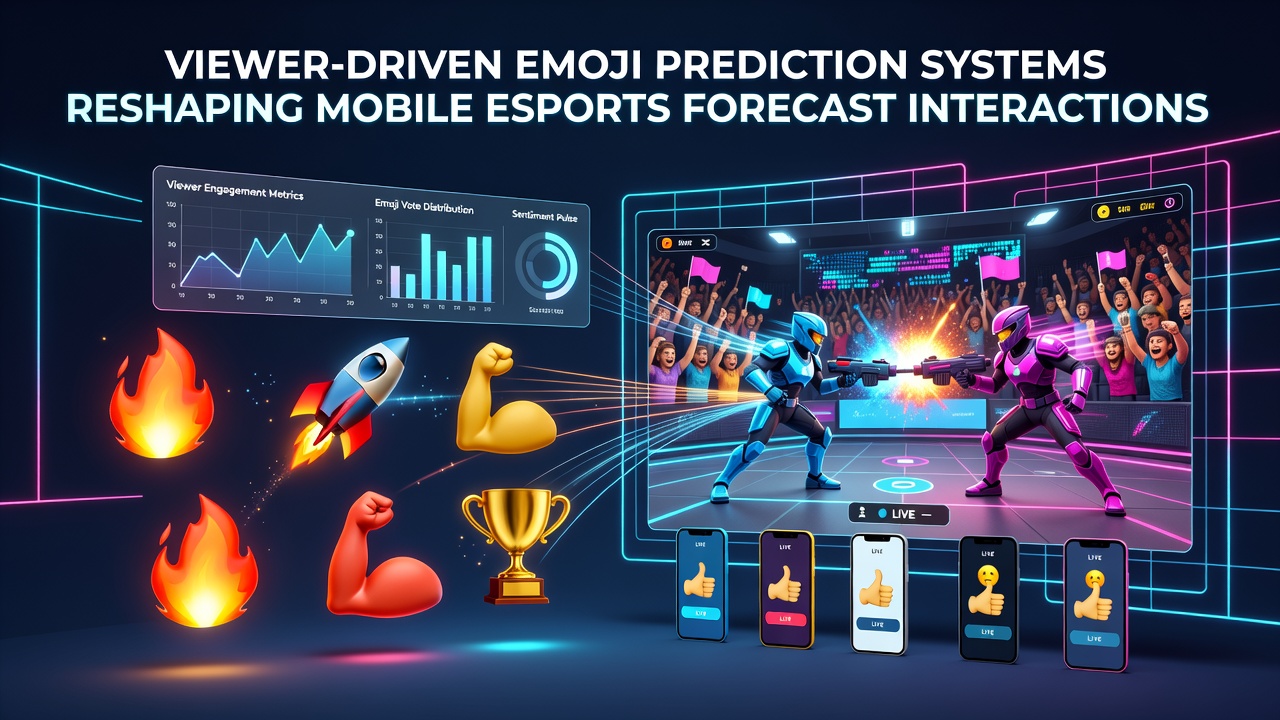
Viewer-Driven Emoji Prediction Systems Reshaping Mobile Esports Forecast Interactions
Viewer-driven emoji prediction systems have gained traction across mobile esports platforms since early 2025, allowing audiences to submit real-time forecasts through standardized emoji selections that feed into aggregated outcome models. These tools operate within dedicated mobile applications where participants select from emoji sets representing strategic choices such as aggressive plays, defensive maneuvers, or specific character abilities during ongoing matches. Data collected from these selections updates live forecast dashboards visible to both viewers and competitors.
Mechanics Behind Emoji-Based Forecasting
Platforms integrate emoji inputs directly into match overlays so that thousands of concurrent users can register predictions without leaving the viewing interface. Each emoji maps to predefined variables in backend algorithms that calculate probability shifts based on collective selections. Researchers at the University of Tokyo documented in a 2026 study how these mappings reduce latency in data processing by converting symbolic inputs into structured datasets that algorithms process alongside telemetry from the game itself. Mobile developers have refined gesture recognition so that selections register even during high-mobility viewing sessions on transit or in crowded environments.
System updates rolled out in September 2026 introduced adaptive emoji libraries that change according to the specific title being broadcast. For instance, fighting game streams now feature distinct sets from those used in battle royale titles, with the adjustments drawn from pattern analysis of prior viewer behavior across regions. Observers note that this customization maintains engagement levels by aligning visual cues with the mechanics of each game.
Platform Integration and Data Flow
Major mobile esports services have embedded these prediction layers into their core applications rather than treating them as add-ons. The integration allows forecast data to influence secondary content such as highlight reels generated automatically from high-consensus moments. Figures from the Asia-Pacific Esports Association reveal that sessions incorporating emoji systems recorded a 27 percent increase in average watch time during the second quarter of 2026 compared with sessions without the feature. The data flows from user devices to centralized servers where machine learning models reconcile emoji votes with in-game events occurring within the same second.
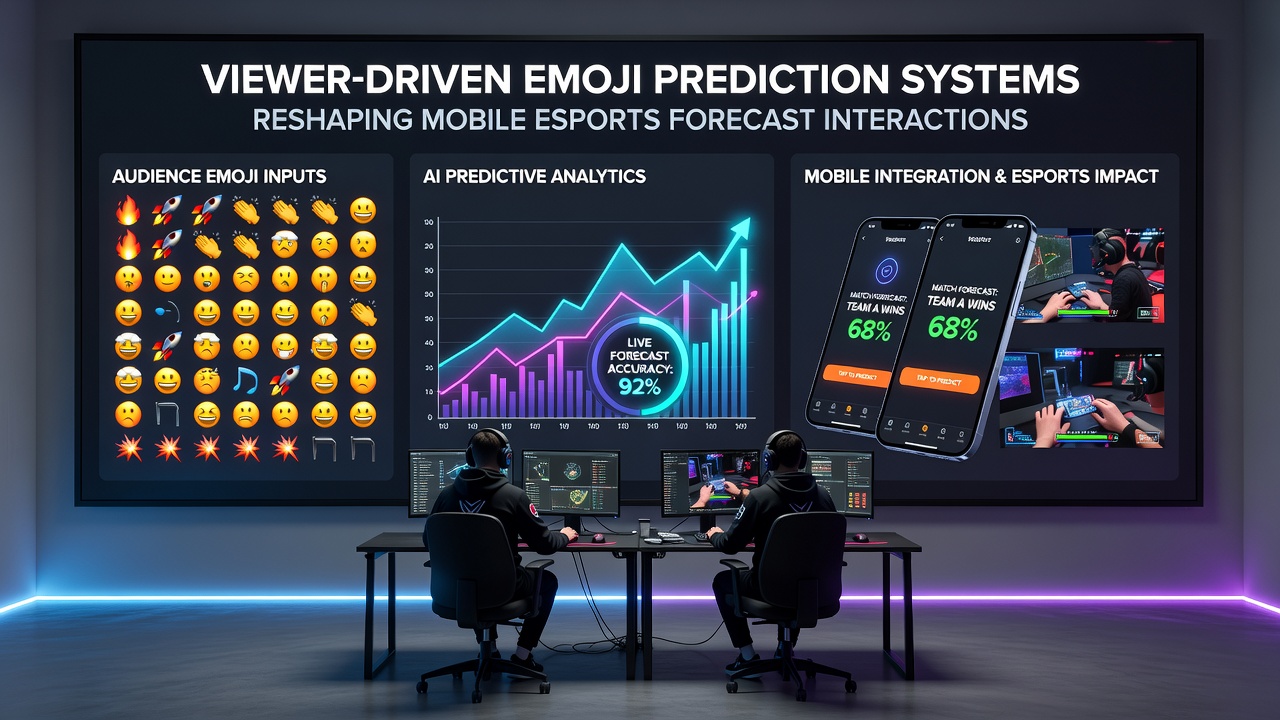
Security protocols verify emoji submissions through device fingerprinting and session tokens to prevent automated flooding of particular selections. European mobile network operators collaborated with platform providers to test these safeguards during cross-border tournaments held in August 2026, confirming that verification steps add less than 80 milliseconds to processing times under typical 5G conditions. The resulting datasets feed into public forecast visualizations that display shifting consensus in real time.
Regional Adoption Patterns
Usage statistics compiled by the Canadian Esports Research Network indicate higher participation rates among viewers aged 18 to 24 in North American markets, where mobile data plans support sustained high-resolution streams. In contrast, Southeast Asian deployments show stronger uptake during evening hours when multiple regional leagues overlap. Platforms adjust server allocation accordingly, routing emoji traffic through localized nodes to maintain responsiveness. One deployment in Singapore processed over 1.4 million emoji submissions during a single regional final in late August 2026 without reported interruptions.
Developers have incorporated accessibility options that translate emoji meanings into text descriptions for users who prefer screen readers. This feature emerged after accessibility audits conducted by the International Game Developers Association highlighted the need for inclusive design in prediction interfaces. The adjustments allow broader audience segments to contribute to the same aggregated forecasts.
Impact on Forecast Accuracy and Content Creation
Forecast models trained on emoji datasets have demonstrated improved alignment with actual match outcomes in controlled tests. A paper presented at the 2026 Mobile Gaming Analytics Conference compared traditional polling methods against emoji systems and found the latter captured nuanced shifts in viewer sentiment that numeric votes often missed. Content creators now reference these collective predictions when producing post-match breakdowns, citing consensus trends as evidence of strategic turning points.
Analytics dashboards provided to tournament organizers display geographic distributions of emoji selections, revealing how audiences in different time zones respond to the same in-game developments. These insights guide scheduling decisions for future events without requiring separate surveys. The systems also log repeat participation rates, showing that users who submit predictions in one match return at higher frequencies for subsequent broadcasts.
Future Technical Developments
Engineers continue to refine emoji recognition models to handle regional variations in symbol interpretation while preserving a shared prediction vocabulary. Hardware manufacturers have begun testing integration with foldable device interfaces that expand the on-screen emoji palette without crowding primary video feeds. Early trials conducted in partnership with South Korean chipset producers showed stable performance across variable network conditions typical of urban commuting patterns.
Cross-platform compatibility remains an active area of work, with standards bodies examining protocols that would allow emoji data to transfer between competing mobile esports applications. The effort draws on existing frameworks developed for real-time messaging services, adapted to the lower bandwidth requirements of symbolic rather than textual input.
Conclusion
Viewer-driven emoji prediction systems continue to evolve as a distinct layer within mobile esports ecosystems, processing collective inputs into actionable forecast updates that influence both live viewing and post-event analysis. Data from multiple 2026 deployments demonstrates measurable effects on session duration and repeat engagement across varied geographic markets. Ongoing refinements in accessibility, security, and cross-device support position these tools for expanded use in upcoming tournament cycles.