Shifts in Viewer Demographics Across Different Time Slots for Casino Game Broadcasts
Henrik Ludwig · Nov 24, 2026
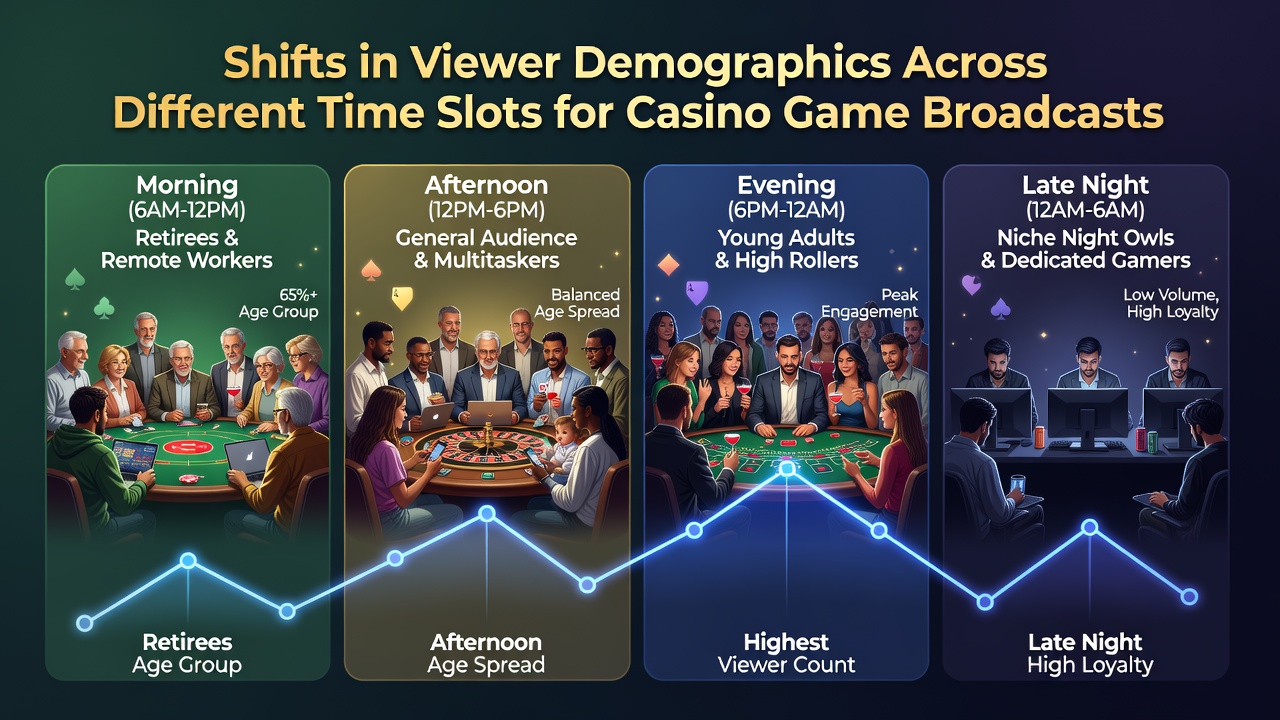
Shifts in Viewer Demographics Across Different Time Slots for Casino Game Broadcasts
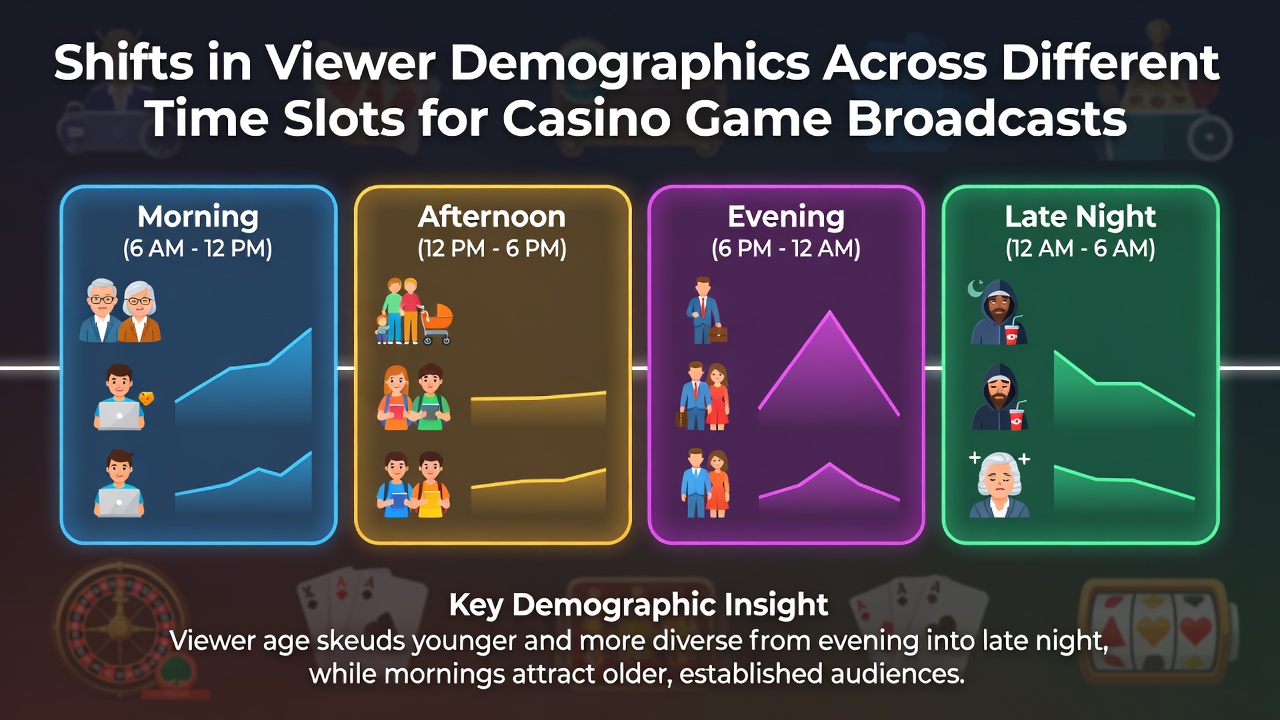
Viewer demographics for casino game broadcasts have shown consistent patterns of change depending on the time slot, with data collected through platform analytics and viewer surveys revealing distinct audience compositions across morning, afternoon, evening, and overnight periods. Researchers tracking these trends note that early slots often attract older participants while later hours draw younger groups, and studies conducted through November 2026 continue to confirm these movements across major streaming platforms.
Morning Broadcast Audiences
Slots running between 6 a.m. and noon typically feature higher percentages of viewers aged 55 and older, many of whom join from retirement communities or during commutes, and figures from industry tracking services indicate this group makes up roughly 45 percent of morning traffic. Women represent a slightly larger share in these hours compared to other times, often engaging with slot machine streams that run on repeat cycles, while geographic data points to stronger participation from viewers in the eastern United States and parts of Canada where time zones align with traditional daytime routines.
Afternoon Transitions
As broadcasts move into the afternoon window from noon to 6 p.m., the audience begins to diversify with increased numbers of students and remote workers appearing in the logs, and data shows a rise in the 18-to-34 age bracket that climbs to about 30 percent by mid-afternoon. Viewership from urban centers grows during these hours because many younger participants log in during breaks or after classes, while gender splits remain closer to even than in morning slots, and observers note that interactive features such as live chat draw higher engagement from this mixed group.
Evening and Prime-Time Patterns
Evening broadcasts between 6 p.m. and midnight see the broadest demographic spread, with working-age adults between 25 and 54 forming the core audience at approximately 50 percent of total viewers according to aggregated platform metrics, and participation from international audiences rises sharply once European and Asian time zones overlap with North American prime time. Men edge ahead slightly in these slots, particularly for table game streams, yet female viewership holds steady through live dealer formats, and one study released in late 2026 highlighted how mobile access during commute hours boosts numbers from suburban regions.
Regional differences become more pronounced after dark, with increased traffic from western states and Australia where late-evening viewing aligns with local leisure time, and cross-border data collected by organizations such as the American Gaming Association shows that these patterns hold steady year over year while minor fluctuations appear during holiday weeks.
Late-Night and Overnight Shifts
After midnight the audience skews younger again, with the 18-to-34 cohort often exceeding 40 percent of active viewers as night-shift workers and students join from different continents, and platform logs reveal a spike in Asian and European participants whose local time falls into early evening. Gender balance tilts back toward male viewers in these hours, particularly for high-stakes table games, while overall numbers drop compared with prime time yet retention rates remain strong among those who stay logged in for extended sessions.
Influencing Factors and Data Sources
Multiple elements drive these demographic movements, including work schedules, time zone differences, and content type preferences, and reports from research institutions such as the European Gaming and Betting Association document how mobile device usage amplifies afternoon and late-night participation across borders. Seasonal changes also play a role, with November 2026 data indicating slight upticks in younger viewers during academic breaks and steady older audiences during standard workweeks.
Conclusion
Overall patterns demonstrate that casino game broadcast audiences do not remain static but instead rotate through predictable demographic phases tied directly to clock time and regional factors, and continued monitoring through industry and academic channels will keep these shifts visible as viewing habits evolve.